


Starting Lead Training on the Right Foot
Puppies are not miniature adult dogs — they are still developing physically and behaviourally, and the equipment you use during those early weeks matters. A lead that is too heavy or too long can be cumbersome for a small puppy to work against. A collar that does not fit correctly can slip over their head or cause discomfort. Starting with a properly sized, lightweight puppy set reduces these risks and helps your pup associate the lead with positive experiences from the very beginning.
Most puppies should be introduced to a collar and lead in short, positive sessions from around eight weeks old. The goal early on is not to go on a structured walk but simply to get them comfortable wearing the equipment and following your lead. Our puppy sets are designed with exactly this stage in mind — light enough not to overwhelm, secure enough to keep them safe.
Our Range & Stock Types
This focused collection contains two puppy collar and lead set options, both priced under £7.
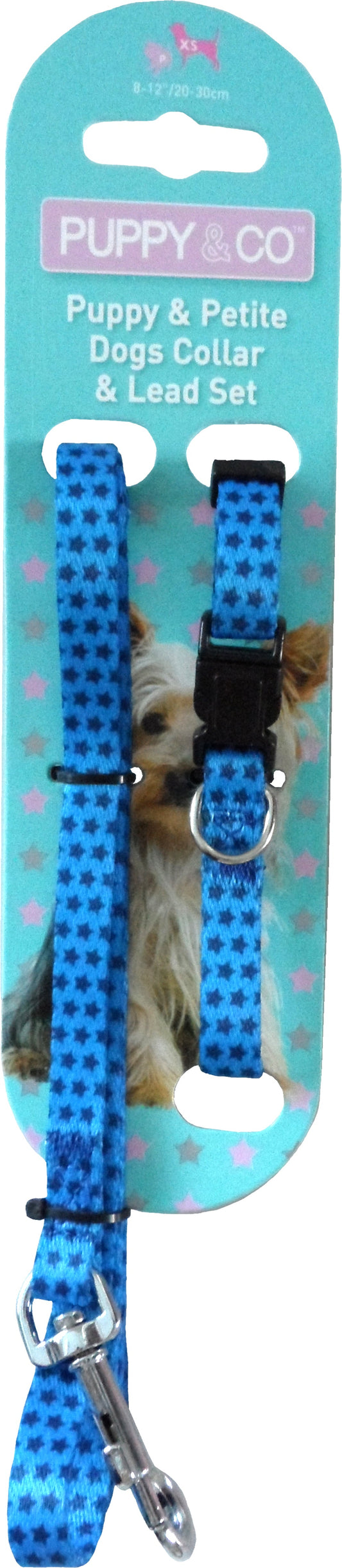
• Puppy & Petite Dog Collar & Lead Set — Blue Stars: A lightweight collar and lead combination sized for puppies and small-to-petite adult dogs. The fun blue stars design makes it easy to spot your pup at a distance, and the set includes everything you need to get started straight away.
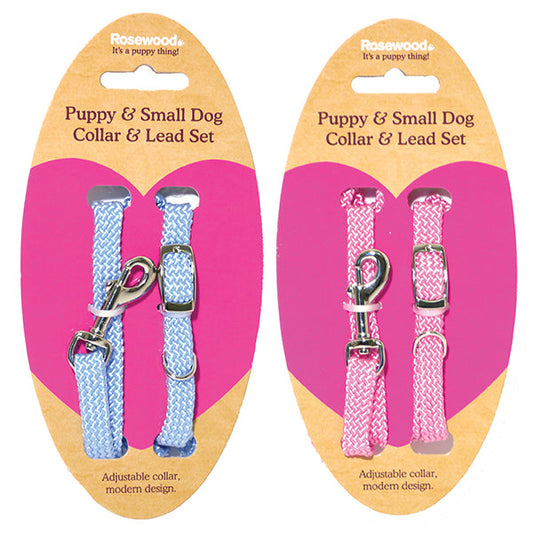
• Puppy Collar and Lead Set — Pink & Blue Twin Pack: A value two-pack containing one pink and one blue collar and lead set. Ideal for multi-puppy households, breeders sending puppies to their new homes with a starter kit, or owners who like to have a spare. Both sets are lightweight and appropriately sized for young puppies."
-
Pup & Co Puppy & Petite Dog Collar & Lead Set
Regular price £6.40Regular priceUnit price per -
Rosewood Puppy Pink And Blue Collar and Lead Set -Pack of 2
Regular price £6.49Regular priceUnit price per
Frequently asked questions
You can begin lead training your puppy as early as 8 weeks old, once they have settled into their new home. Early training helps them get used to the sensation of a lead and collar, making walks more enjoyable and safe.
Lightweight and comfortable puppy leads are ideal for training, as they won’t weigh your puppy down or cause discomfort. Secure leads with gentle but firm control help your puppy learn to walk properly without pulling.
Look for leads made from soft, flexible materials that won’t chafe or irritate your puppy’s skin. Adjustable lengths and padded handles also add comfort for both you and your puppy during walks.
Hands-free leads allow you to keep your hands free for treats or guiding your puppy, improving control and making training sessions smoother. They also promote better posture and reduce strain during longer walks.
A puppy harness distributes pressure more evenly across the body, reducing strain on the neck and throat. It offers better control during walks and is especially helpful for puppies that pull or have delicate necks.
Essential accessories include lightweight leads, comfortable collars or harnesses, and waste bag holders. Reflective or brightly coloured leads, like pink or blue puppy leads, also enhance visibility and safety during walks.
Lightweight leads reduce strain on your puppy’s developing muscles and joints, making walks more comfortable. They also encourage natural movement and make training sessions less tiring for young dogs.
Measure your puppy’s neck or chest circumference with a soft tape measure, leaving enough room to fit two fingers comfortably. Adjustable collars and harnesses ensure a secure and comfortable fit as your puppy grows.
Soft nylon, padded fabric, and lightweight leather are excellent choices for puppy leads and collars. These materials provide durability, comfort, and security without irritating your puppy’s sensitive skin.
Replace leads and collars when they show signs of wear, damage, or no longer fit properly due to your puppy’s growth. Regularly checking ensures your puppy’s safety and comfort during walks.
Look for strong clips, durable stitching, and materials that resist chewing or fraying. A secure lead should also have a comfortable handle and be lightweight enough for your puppy to carry easily.
Yes, puppy leads are typically lighter, softer, and shorter to suit smaller sizes and sensitive skin. They provide gentle control ideal for training, unlike some adult dog leads which may be heavier or longer.